
This website may earn a commission from purchases made through affiliate links.
Social media feels like a party where everyone looks perfect, even when real life feels messy and tired. What’s really going on behind the feed though and why does it make so many of us feel shaky about our bodies and worth?
I want to be honest with you. I scroll too. Sometimes I laugh. Sometimes I compare. And sometimes I feel … well … less than. We all do it.
The way social media shapes body image is not just “in our heads.” There is real science showing that seeing picture‑perfect feeds encourages comparison and can chip away at self‑esteem when we look at ourselves through that lens. But it is not hopeless. Let’s look into what’s happening and how you can create a healthier relationship with social media and yourself.
Why Social Media Can Make Us Feel Worse About Our Bodies
Here’s the honest truth: a lot of what we see online is edited, curated, polished, and perfected. And our brains don’t always know that what we are looking at isn’t real life. Filters, angles, and retouching are everywhere and they tap into something very human and very old … comparison.
 Have you ever stood so close to a painting that all you see is a blob of color… then you step back and suddenly the picture makes sense? Read this next...
When we scroll through appearance‑focused platforms, we often compare ourselves to images that represent a beauty ideal rather than real humans living real lives. This isn’t just my feeling. Research shows people who view idealized images tend to feel more dissatisfied with their own bodies and self‑esteem goes down, especially when comparisons start happening automatically in our minds.
Our brains are wired to compare. Human beings want to understand where they fit in socially and physically. When most of what we see online looks edited or “better than us,” that instinct kicks into overdrive and can make us feel like we don’t measure up. This is especially powerful during adolescence and young adulthood but it can show up at any age.
How It Affects Your Inner World
Here’s where it starts to feel so real. It isn’t just about beauty standards on a screen. When we keep looking at other people’s beautifully edited photos we are actually training our brains to judge ourselves by impossible standards. Studies show that the more you see that type of content, the more likely you are to feel dissatisfaction with how your own body looks.
There’s something called social comparison that becomes automatic. You know that feeling when you scroll just a little too long and then suddenly you’re thinking about how your thighs look in shorts or how your stomach should be flatter? That is social comparison in action, and it can dig under your confidence and your mood without you even noticing.
Why Some Content Hurts More Than Others
Not all scrolling is equal. Research suggests it’s not just about how long you spend online but what you are engaging with. Seeing content focused on weight loss, heavily edited images, or idealized appearances is linked to lower body appreciation and more anxiety about appearance.
It makes sense if you think about it like this. It’s one thing to see your cousin at a family dinner looking happy and real in their photos. It’s another to see a feed full of perfectly sculpted, professionally lit images that don’t feel human. Our minds can internalize those images as “goals” instead of what they are … staged marketing of an ideal.
So What Helps You Feel Better and More Grounded?
This is the part I want you to take deep slow breaths for. Because here is the good news. You can build a healthier relationship with social media and your own self-image. And it doesn’t start with perfection. It starts with awareness and small shifts that feel doable.
Choose What You Consume With Intention
It sounds so simple, but it’s true. Follow people who show real bodies, real moments, and real emotions. If a feed makes you tense or uneasy, it’s okay to unfollow or mute. You don’t owe anyone that energy.

Be Kind To Yourself in Comparison Moments
When your brain starts tugging you toward comparison, call it out gently. Comparison is normal. It does not mean you are weak. It just means your brain is trying to understand the world. Saying something like “I’m noticing I’m comparing right now” helps you step out of autopilot and into choice.
Notice How You Feel After Scrolling
After a scrolling session, check in with your body and heart. Do you feel curious, encouraged, stressed, or drained? Your emotional feedback is a compass. If it doesn’t feel good, that’s okay to change it.
Embrace Your Real Life With Compassion
Your body does so much for you every day. It makes you laugh, it carries you through life, it feels love. That’s more than any number on a screen. When you remember that, the comparison loses some of its sting.
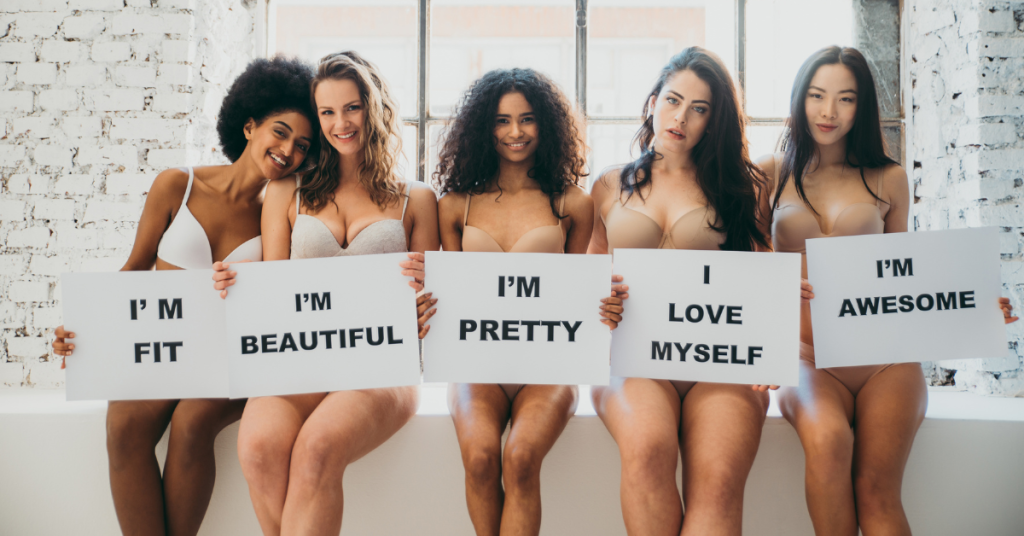
Social media does not have to be the villain. But it also isn’t neutral. It is a powerful tool that can shape how we see our bodies and ourselves. Knowing what it does gives you power back. You can scroll with awareness. You can choose what feeds you emotionally. You can practice gentle self-compassion when comparison creeps in.
This journey toward a healthier self-image is not perfect. It is real. It is messy sometimes and that is okay. Because your worth does not come from a screen or a filtered photo. It comes from your story, your strength, and your presence in the world.
Are you loving the health, wellness, and personal growth content on our blog? Want to take your journey to the next level? Look no further! Our weekly newsletter is packed with personalized tips, mouthwatering recipes, insightful articles, and fitness secrets.
